
Pneumatic vs Hydraulic Systems: Full Comparison
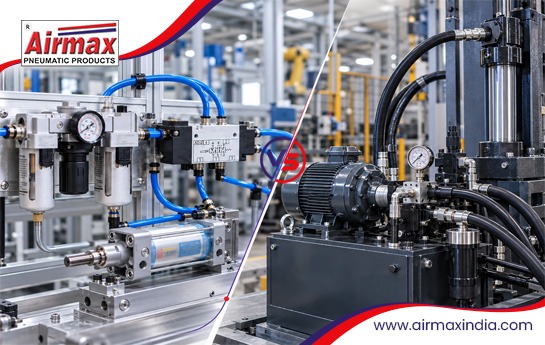
If you have ever walked through a busy factory floor, chances are you have seen both pneumatic and hydraulic systems at work – sometimes side by side, sometimes competing for the same job. Both use fluid power to create motion. Both are proven, mature technologies that have been around for decades. And both have passionate advocates who will tell you their system is the better choice.
So which one actually is?
The honest answer is: it depends. Each system has clear strengths and equally clear limitations. The right choice comes down to your specific application, your industry, your budget, and what you value most – raw power, speed, cleanliness, or cost efficiency.
In this guide, we will break down every meaningful difference between pneumatic and hydraulic systems so you can make an informed decision. No jargon overload, no bias – just a practical comparison grounded in real-world experience.
What Is a Pneumatic System?
A pneumatic system uses compressed air to transmit power and create mechanical motion. An air compressor generates the compressed air, which travels through pipes and hoses to components like pneumatic cylinders, directional control valves, and actuators that convert that air pressure into linear or rotary motion.
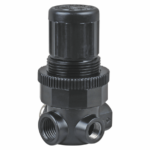
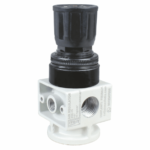
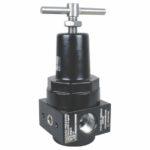
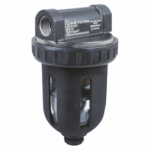
Before the compressed air reaches these working components, it typically passes through FRL units (Filter, Regulator, Lubricator) that clean the air, regulate its pressure, and add lubrication to protect internal parts. Supporting components like moisture separators, pneumatic fittings, and air pressure regulators complete the system.
Pneumatic systems are widely used in manufacturing, packaging, food processing, pharmaceuticals, textiles, and chemical processing – essentially any industry where clean, fast, and safe automation is a priority.
What Is a Hydraulic System?
A hydraulic system works on the same basic principle – fluid under pressure creates motion – but instead of air, it uses hydraulic oil or other incompressible liquids. A hydraulic pump pressurises the fluid, which flows through hoses to hydraulic cylinders and motors.
Because liquids cannot be compressed the way air can, hydraulic systems can generate significantly more force. This makes them the go-to choice for heavy-duty applications like construction equipment, metal stamping presses, injection moulding machines, and aircraft landing gear.
However, this raw power comes with trade-offs in complexity, cost, maintenance, and cleanliness – all of which we will explore below.
Head-to-Head Comparison: Pneumatic vs Hydraulic
Here is a quick-reference comparison across 12 key parameters:
| Parameter | Pneumatic System | Hydraulic System |
| Power Medium | Compressed air | Hydraulic oil / fluid |
| Force Output | Low to moderate (up to ~50 kN typical) | Very high (up to 1,000+ kN) |
| Operating Speed | Fast – high cycle rates | Slower – precise but not as rapid |
| Response Time | Very fast | Moderate |
| Precision Control | Good, improving with modern regulators | Excellent – fine positioning |
| Installation Cost | Low | High |
| Operating Cost | Moderate (electricity for compressor) | Higher (pump + fluid + cooling) |
| Maintenance | Simple and low-cost | Complex and expensive |
| Cleanliness | Very clean – air is the medium | Risk of oil leaks and contamination |
| Safety (fire/explosion risk) | Inherently safe – non-flammable | Oil is combustible – fire risk |
| Environmental Impact | Air leaks are harmless | Oil spills are hazardous |
| Noise Level | Can be noisy (exhaust air) | Generally quieter |
Now, let us dig deeper into the factors that matter most.
Power and Force: Hydraulics Win This Round
When it comes to raw, brute-force power, hydraulic systems are simply in a different league. Because hydraulic fluid is incompressible, these systems can generate enormous forces in a compact package. A hydraulic cylinder the size of your forearm can produce forces that would require a pneumatic cylinder the size of a small barrel.
According to the International Organization for Standardization (ISO), standard hydraulic cylinders commonly operate at pressures between 100 and 350 bar, while pneumatic systems typically operate between 4 and 10 bar.
Bottom line: If your application involves heavy pressing, lifting, or clamping – think metal forming, die casting, or heavy construction – hydraulics are usually the right call.
Speed and Response Time: Pneumatics Take the Lead
What pneumatic systems lack in raw force, they more than make up for in speed. Compressed air travels fast, and pneumatic cylinders can complete extend-retract cycles in fractions of a second. This makes pneumatics ideal for high-speed pick-and-place operations, sorting, packaging, and any application where cycle time matters.
Modern directional control valves – such as solenoid-operated poppet valves – switch airflow direction almost instantaneously, enabling rapid and repeatable motion that hydraulic systems simply cannot match at the same price point.
Bottom line: If speed and cycle rate are your priority, pneumatics are hard to beat.
Cost of Ownership: Pneumatics Are Easier on the Budget
Let us talk money – not just the purchase price, but the total cost of owning and operating each system over its lifetime.
Installation Cost
Pneumatic systems are significantly cheaper to install. Compressed air infrastructure – piping, fittings, and FRL units – is simpler and less expensive than hydraulic piping, which requires precision-welded steel lines, reservoirs, coolers, and filtration units.
Operating Cost
The U.S. Department of Energy notes that compressed air systems account for a significant portion of industrial electricity consumption. However, hydraulic systems are not cheap to run either – they require electric pumps, fluid cooling systems, and regular fluid replacement. When all factors are considered, pneumatics generally come out ahead for light-to-medium-duty applications.
Maintenance Cost
This is where pneumatics really shine. Pneumatic components have fewer moving parts exposed to high-stress conditions. A well-maintained FRL set keeps the air clean and lubricated, extending the life of every downstream component. Hydraulic systems, on the other hand, require regular fluid analysis, filter changes, seal replacements, and hose inspections – all of which add up quickly.
Bottom line: For most light and medium industrial applications, pneumatics offer a lower total cost of ownership.
Safety and Cleanliness: Pneumatics Are the Clear Winner
This is often the deciding factor for industries like food processing, pharmaceuticals, medical devices, and chemical manufacturing.
Pneumatic systems run on compressed air. If a hose bursts or a fitting leaks, all that escapes is air. There is no oil to contaminate products, no fire risk from combustible fluid, and no hazardous waste to clean up.
Hydraulic systems, by contrast, use oil under high pressure. A ruptured hydraulic hose can spray hot oil across a workspace – creating slip hazards, fire risks, and potential product contamination. In food and pharma environments, even a minor hydraulic oil leak can trigger a full production shutdown and regulatory investigation.
This is also why moisture separators and high-quality air filters are so important in pneumatic systems – they ensure the air supply remains dry and contaminant-free, protecting both the equipment and the end product.
Bottom line: If cleanliness, food safety, or hazardous environment compliance matters to you, pneumatics are the safer choice.
Maintenance and Reliability: Pneumatics Keep It Simple
Ask any maintenance engineer which system they would rather work on, and most will point to pneumatics without hesitation.
Pneumatic components are straightforward to troubleshoot, easy to replace, and widely available. A leaking cylinder seal, a worn valve, or a clogged filter – these are quick, low-cost repairs. With a proper air regulator and clean air supply, pneumatic systems can run for years with minimal intervention.
Hydraulic maintenance is another story entirely. Fluid contamination, seal degradation, internal leakage, hose failures, and overheating are all common issues that require specialised knowledge and expensive parts to resolve.
According to Fluid Power World, up to 80% of hydraulic system failures are caused by fluid contamination – a problem that simply does not exist in pneumatic systems.
Bottom line: Pneumatic systems are easier and cheaper to maintain, with a longer mean time between failures for most standard applications.
Environmental Impact: Pneumatics Have a Lighter Footprint
From an environmental standpoint, the comparison is straightforward:
- Pneumatic leaks release air – no environmental harm, though they waste energy (which is why regular leak detection and quality fittings matter)
- Hydraulic leaks release oil – a hazardous substance that contaminates soil, water, and work surfaces, requiring professional cleanup and disposal
Additionally, hydraulic fluid itself must be periodically replaced and disposed of according to environmental regulations, adding ongoing cost and compliance burden.
When to Choose Pneumatics
Pneumatic systems are the better choice when your application requires:
- High speed and fast cycling – packaging, sorting, assembly
- Clean operation – food, pharma, medical, electronics
- Safety in hazardous environments – chemical plants, explosive atmospheres
- Low maintenance – remote or hard-to-access installations
- Cost efficiency – budget-conscious projects without extreme force requirements
- Simple design – easier to install, modify, and troubleshoot
Pneumatic components from a reliable manufacturer – such as pneumatic cylinders, solenoid valves, rotary joints, and complete FRL units – make these advantages accessible and affordable.
When to Choose Hydraulics
Hydraulic systems are the better choice when:
- Extreme force is required – metal stamping, forging, heavy lifting
- Precise position control under heavy load – CNC machines, injection moulding
- Compact, high-power actuators are needed – mobile equipment, aerospace
- Holding force without energy consumption – hydraulic locks and clamps
Making the Right Choice for Your Plant
The pneumatic vs hydraulic debate is not about which system is universally better. It is about which system is better for your specific needs. And for the vast majority of industrial automation applications – especially in India’s growing manufacturing, food processing, chemical, textile, and pharmaceutical sectors – pneumatic systems offer the winning combination of speed, safety, simplicity, and value.
The key is choosing components that are engineered for reliability and backed by a manufacturer who understands industrial demands.
Airmax Pneumatics Ltd., based in Ahmedabad, India, is a leading pneumatic valve manufacturer and supplier with a comprehensive range of industrial pneumatic products – from cylinders and control valves to FRL units, rotary joints, and accessories. Every component is precision-engineered, ISO-certified, and built for the real-world conditions of Indian industry.
Ready to power your automation with reliable pneumatic systems? Get a quote from Airmax Pneumatics today or explore our full product catalogue.