
Why Chemical Processing Plants Need Reliable Automation Systems
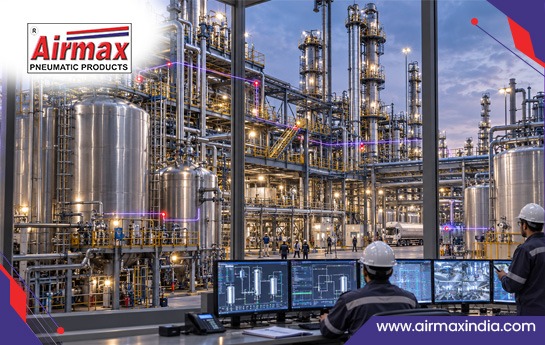
Chemical processing plants are among the most demanding industrial environments in the world. From handling volatile raw materials to maintaining exact pressure and temperature conditions, every step in a chemical plant requires absolute precision. One small error – a valve that sticks, a cylinder that misfires, or a pressure drop that goes unnoticed – can lead to costly shutdowns, product contamination, or even dangerous accidents.
That is exactly why reliable automation systems are not just a nice-to-have in chemical processing. They are a necessity.
In this blog, we will explore why chemical plants must invest in dependable automation, the key components involved, and how the right pneumatic solutions can make all the difference.
The Unique Challenges of Chemical Processing Environments
Unlike a typical manufacturing setup, chemical processing plants deal with extreme conditions on a daily basis. Corrosive chemicals, high pressures, elevated temperatures, and hazardous vapors are part of the everyday reality. Equipment in these plants needs to withstand all of this without missing a beat.
Manual processes simply cannot keep up with the level of accuracy and speed that modern chemical production demands. Human operators, no matter how skilled, are prone to fatigue, distraction, and error – especially in environments where even a small mistake can have serious consequences.
This is where automation steps in. Automated systems can monitor, control, and adjust processes in real time, 24 hours a day, without any drop in performance. But here is the catch – not just any automation will do. In a chemical plant, the automation must be reliable. And that word carries more weight in this industry than almost any other.
What Makes Automation “Reliable” in Chemical Processing?
When we talk about reliability in chemical plant automation, we are talking about systems that:
- Perform consistently under extreme temperatures and pressures
- Resist corrosion from aggressive chemicals and vapors
- Are fail-safe, meaning they default to a safe state during power loss or system failure
- Require minimal maintenance, reducing the chances of unexpected breakdowns
- Offer long service life, even in the harshest operating conditions
Components like pneumatic cylinders, directional control valves, and FRL units (Filter, Regulator, Lubricator) play a critical role in delivering this kind of dependability. When sourced from a trusted manufacturer, these components become the backbone of a chemical plant’s automation infrastructure.
Key Automation Components Used in Chemical Plants
Let us break down the essential pneumatic components that chemical processing plants rely on:
1. Pneumatic Cylinders
Pneumatic cylinders convert compressed air into linear motion and are used extensively in chemical plants to operate valves, control dampers, and drive mixing equipment. Their advantage in chemical environments is clear – unlike electrical actuators, pneumatic cylinders produce no sparks, making them inherently safer in explosive or flammable atmospheres.
2. Directional Control Valves
Directional control valves manage the flow direction of compressed air within a pneumatic circuit. In a chemical plant, these valves determine how and when actuators move, ensuring precise control over processes like dosing, mixing, and material transfer. Solenoid-operated variants, such as the Poppet Solenoid Valve series, offer quick response times and dependable switching, which is crucial in time-sensitive chemical reactions.
3. FRL Units
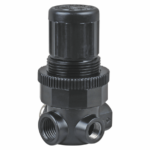
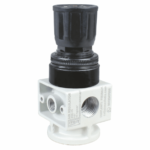
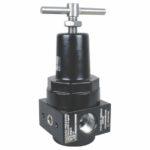
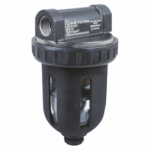
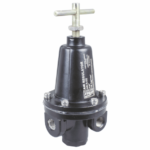
Air quality matters enormously in pneumatic automation, especially in chemical plants where contaminated air can damage sensitive equipment or even compromise product quality. FRL units – which include air filters, regulators, and lubricators – ensure that the compressed air entering the system is clean, at the right pressure, and properly lubricated. This extends equipment life and keeps the entire system running smoothly.
4. Moisture Separators
Excess moisture in compressed air lines can cause corrosion, water hammer, and instrument failure – all of which are particularly dangerous in chemical processing. Moisture separators remove water droplets from the air supply before they can cause damage, adding another layer of reliability to the automation system.
5. Rotary Joints
In applications where rotating equipment needs a continuous supply of air, steam, or other media, rotary joints provide leak-free connections that can handle high-speed rotation. Chemical plants use them in dryers, coaters, and other rotating machinery where continuous media flow is essential.
Safety: The Non-Negotiable Priority
Safety is the number one concern in any chemical facility. According to the Occupational Safety and Health Administration (OSHA), chemical reactivity hazards are responsible for some of the most severe industrial accidents globally. Reliable automation drastically reduces the risk of these incidents.
Pneumatic automation systems are inherently safer in hazardous environments because they operate on compressed air rather than electricity. This eliminates the risk of electrical sparks in explosive atmospheres – a critical advantage in plants that handle flammable solvents, gases, or fine powders.
Furthermore, modern pneumatic valves and actuators can be designed with fail-safe features that automatically move to a safe position (open or closed) during a loss of air supply or control signal. This kind of built-in protection can literally save lives.
Precision and Consistency in Production
Chemical manufacturing demands exact proportions, temperatures, and timing. Even slight variations can result in off-spec products, wasted raw materials, or hazardous reactions.
Reliable automation systems with precisely calibrated air pressure regulators and high-quality control valves ensure that every batch is produced under identical conditions. This level of consistency is nearly impossible to achieve with manual control.
The result? Higher product quality, less waste, and greater confidence in meeting industry standards and customer specifications.
Reducing Downtime and Maintenance Costs
Unplanned downtime in a chemical plant is incredibly expensive. A study by the Aberdeen Group found that unplanned downtime costs industrial manufacturers an estimated $260,000 per hour on average. For chemical plants dealing with continuous processes, even a few hours of stoppage can cascade into days of lost production.
By investing in reliable, high-quality pneumatic components – from pneumatic fittings and accessories to complete valve assemblies – chemical plants can significantly extend maintenance intervals and avoid the costly consequences of unexpected breakdowns.
Durable construction, corrosion-resistant materials, and precision engineering are the hallmarks of components that are built to last. That is why choosing the right pneumatic valve manufacturer matters so much.
The Role of Pneumatic Systems in Chemical Automation
While there are many types of automation – electrical, hydraulic, digital – pneumatic systems hold a special place in chemical processing for several key reasons:
- Spark-free operation in explosive environments
- Clean and simple – compressed air is easy to generate, store, and distribute
- Fast response times for precise process control
- Low maintenance compared to hydraulic systems
- Cost-effective for both installation and long-term operation
For chemical plants looking for a balance of safety, reliability, and performance, pneumatic automation is often the ideal choice.
Choosing the Right Automation Partner
When selecting pneumatic components for a chemical plant, it is important to work with a manufacturer that understands the unique demands of the industry. Look for:
- ISO-certified manufacturing to ensure consistent quality (View Certifications)
- A wide product range covering cylinders, valves, FRL units, rotary joints, and accessories (Explore Products)
- Technical expertise and willingness to provide custom solutions
- Proven track record with industrial clients across sectors (About Us)
Airmax Pneumatics Ltd., based in Ahmedabad, India, is a leading pneumatic valve manufacturer and supplier with decades of experience serving chemical processing, pharmaceutical, textile, and other demanding industries. With a comprehensive product range and commitment to engineering precision, Airmax is a trusted partner for plants that cannot afford to compromise on reliability.
Final Thoughts
Chemical processing plants operate in an environment where the margin for error is almost zero. Reliable automation is not a luxury – it is the foundation of safe, efficient, and profitable operations.
From pneumatic cylinders that drive critical actuators to moisture separators that protect your entire air system, every component matters. Choosing the right equipment from a trusted manufacturer ensures that your plant runs smoothly, day after day.
Ready to upgrade your chemical plant’s automation systems? Get a quote from Airmax Pneumatics today or explore our full range of industrial pneumatic products.