
2025-26: How Industry 4.0 & Pneumatic Cylinders Defined Automation Growth
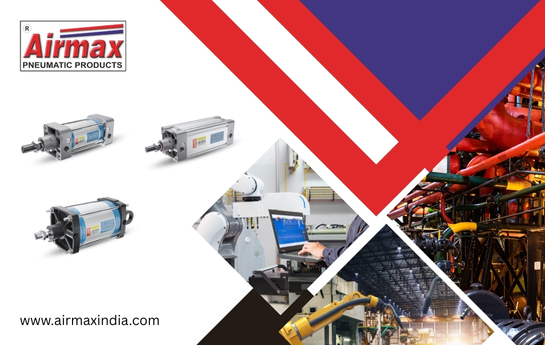
If you walked into any major manufacturing plant in India back in 2023, you’d see machines doing their job, but they weren’t exactly “talking” to each other. Fast forward to the end of 2025, and the vibe has totally changed. We’ve just crossed a massive turning point.
At Airmax Pneumatics, we’ve watched this shift happen from the front row. The last twelve months proved that “standard” isn’t enough anymore. If your machines aren’t smart, they’re basically dinosaurs. But here’s the thing: everyone talks about software and AI, but nobody talks about the “muscle” that actually moves the machine. We’re talking about Industry 4.0 meeting the grit of high-performance pneumatics.
The 2025 Turning Point: From Basic Mechanics to Industry 4.0 Intelligence
The year 2025 was a wake-up call. Indian manufacturing stopped just “buying machines” and started building ecosystems. This is where smart manufacturing finally moved from a buzzword to the factory floor.
We saw a huge surge in Industrial Automation Trends 2026. What changed? Comp
anies realized that data is useless if the mechanical part of the machine can’t keep up. You can have the best sensors in the world, but if your cylinder lags by even a millisecond, your whole Industry 4.0 setup fails. B2B buyers now look for components that offer more than just movement; they want precision that integrates with digital twins and real-time monitoring.
The Hero of the Factory Floor: Why Pneumatic Cylinders Ruled 2025
Let’s be honest: the Pneumatic Cylinder is the real hero of 2025. While valves get the “brain” credit, the cylinder does the heavy lifting.
Precision over Power: The High-Speed Requirement
In sectors like pharma and food packaging, speed used to be the only goal. Now, it’s about precision. We noticed a massive shift toward high-performance pneumatic cylinders that don’t just bang back and forth. They move with a specific grace. These double acting cylinders are now designed to handle insane cycle counts without losing their micron-level accuracy. That’s the high-speed cylinder efficiency everyone was chasing last year.
Reliability in Every Stroke: Minimizing Downtime in Smart Plants
A smart plant is expensive. If a line stops because a seal failed in a cheap cylinder, the losses are staggering. In 2025, reliability became the new currency. We’ve seen engineers move away from “use and throw” components. They want cylinders that can survive the heat, the dust, and the constant movement of a 24/7 production cycle. If it doesn’t offer “reliability in every stroke,” it has no place in a modern factory.
The Control Layer: Intelligence via Valves
If the cylinder is the muscle, the Directional Control Valve (DCV) is the nervous system.
Directional Control Valves: The Brain of the Pneumatic Circuit
In the 2025-26 era, a valve isn’t just a gate for air. It’s an integration point. Our solenoid valves now spend their lives communicating with PLCs and SCADA systems. When we talk about pneumatic control systems, we’re talking about components that can switch at lightning speed to keep up with the demands of Industry 4.0.
High-Frequency Switching and Response Time in 2026
Production lines are faster than ever. A 5/2 way solenoid valve today has to perform millions of cycles with zero lag. Why? Because in a smart factory, every millisecond of delay is a data point that shows up as “inefficiency” on the manager’s dashboard. We’ve focused heavily on reducing that response time, making sure the air moves exactly when the computer says so.
Air Quality: Protecting the Industry 4.0 Investment
Here is a hard truth we learned in 2025: Smart factories are actually quite sensitive. You can spend crores on high-end automation, but if you feed it dirty, wet air, it will die.
Why Smart Valves Require “Ultra-Clean” Air to Function
Modern Industry 4.0 sensors are delicate. Fine dust or tiny water droplets can ruin a solenoid valve or a precision air cylinder in days. We call it the “Silent Profit Killer.” If you don’t treat your air, you’re basically throwing money down the drain.
FRL Units & Moisture Separators: The First Line of Defense
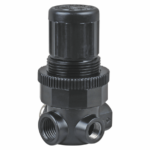
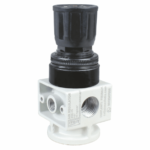
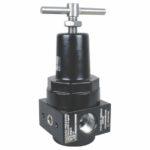
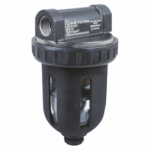
This is where the air preparation units come in. Our pneumatic FRL units and industrial moisture separators became the most requested items in 2025. Why? Because maintenance managers realized that clean air is the best insurance policy for their automation. A good moisture separator removes the gunk before it reaches the “smart” parts. It’s not fancy, but it’s the reason the factory stays running on a Monday morning.
The Missing Link: Rotary Joints & Accessories in Continuous Motion
We can’t talk about 2025 without mentioning the specialized stuff. Not every movement is a straight line.
Beyond Standard Parts: Solving Leakage in Rotating Machinery
For industries like textiles and paper, rotary joints are the unsung stars. Keeping air or fluid moving while a part is spinning at high speed is a nightmare if the quality is low. We’ve perfected leak-proof rotary joints that handle the pressure without breaking a sweat. In 2025, “zero leakage” became the standard, not a luxury.
Small Components, Big Impact: The Role of Pneumatic Accessories
Don’t ignore the fittings and tubes. A tiny leak in a 10-rupee fitting can cause a pressure drop that confuses a smart sensor, leading to a system-wide error. In 2026, we’re seeing a move toward high-quality pneumatic accessories in India. People are finally realizing that the chain is only as strong as its weakest link.
Industry Insights: What 2025 Taught Us About ROI in Automation
Looking back at the data from our clients at Airmax Pneumatics Ltd, one thing stands out: The “cheap” option is always more expensive in the long run.
The Cost of Quality vs. The Price of Downtime
In 2025, we saw a lot of “repair vs. replace” debates. The companies that won—the ones that grew—were the ones that invested in high-quality hardware from the start. They understood that ROI on factory automation isn’t about the purchase price; it’s about how many months the machine runs without someone needing to fix it.
Predictive Maintenance: The 2026 Roadmap
As we move further into 2026, the goal is predictive maintenance. We want our cylinders and valves to tell you they’re tired before they actually break. By using high-grade materials and precision engineering, we’re making hardware that plays nice with the diagnostic tools of the future.
Conclusion: Building a Reliable Future with Airmax Pneumatics
The “Automation Boom” isn’t just about robots and flashy screens. It’s about the air, the pressure, and the mechanical stroke of a cylinder that doesn’t quit. 2025 taught us that while Industry 4.0 provides the “vision,” Airmax Pneumatics provides the “execution.”
You can’t have a smart factory with dumb hardware. Whether it’s a pneumatic cylinder acting as the muscle or an FRL unit keeping the “blood” of the machine clean, every part matters. As we look into 2026, the focus remains the same: engineering excellence that supports India’s manufacturing dreams.
Ready to Audit Your Pneumatic Efficiency for 2026?
Don’t let legacy components stall your Industry 4.0 progress. Partner with Airmax Pneumatics for high-precision cylinders and control systems engineered for the future. We don’t just sell parts; we provide the reliability your automation demands.
Explore the Airmax Pneumatic Products | Contact Our Technical Experts Today
Frequently Asked Questions (PAA)
How does Industry 4.0 impact pneumatic system design?
It demands more precision and faster response times. Components now need to integrate with electronic control systems (PLCs) seamlessly to provide data-driven results.
Why are moisture separators essential for smart factories?
Smart valves and sensors are easily damaged by water and oil. A moisture separator ensures the air is clean, protecting your high-cost automation investment.
What is the expected lifespan of a high-performance pneumatic cylinder in 2026?
With proper air lubrication and high-quality seals, a premium cylinder like those from Airmax can last for tens of millions of cycles, depending on the load and environment.