
Pneumatics in Automotive & Food and Beverage Industry
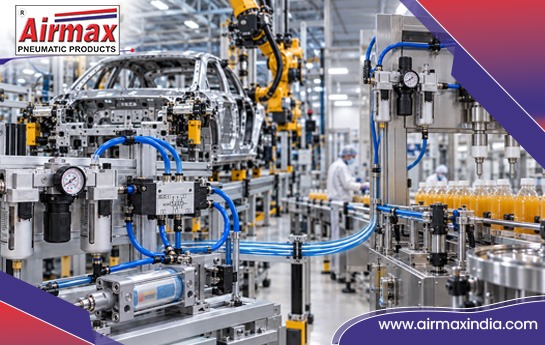
Walk into any modern car manufacturing plant or a large-scale food processing facility, and you will notice something they have in common – the constant, rhythmic hiss of compressed air at work.
Pneumatic systems are the unsung heroes behind millions of products that roll off assembly lines and fill supermarket shelves every single day. From the robot arms that weld car body panels together to the filling machines that pour juice into bottles at hundreds of units per minute, pneumatics make it all happen – quietly, reliably, and efficiently.
In this blog, we will take a closer look at how pneumatic technology powers two of the world’s most important industries: automotive manufacturing and food & beverage processing. We will explore the specific applications, the reasons these industries trust pneumatics over other technologies, and the components that keep everything running smoothly.
Why Pneumatics? A Quick Refresher
Before we dive into specific industries, let us quickly recap why pneumatic systems are so widely used in industrial automation.
Pneumatic systems use compressed air to create mechanical motion. The air is generated by a compressor, cleaned and regulated by FRL units (Filter, Regulator, Lubricator), and then directed to actuators like pneumatic cylinders and directional control valves that perform the actual work.
The key advantages that make pneumatics a favourite across industries:
- Speed – Compressed air moves fast, enabling rapid cycle times
- Safety – No sparks, no combustible fluids, no electrocution risk
- Cleanliness – The working medium is just air
- Simplicity – Easy to install, operate, and maintain
- Cost-effectiveness – Lower upfront and long-term costs compared to hydraulics
Now, let us see how these advantages play out in real-world automotive and food & beverage settings.
Pneumatics in the Automotive Industry
The automotive industry is one of the largest consumers of pneumatic technology in the world. Whether it is a compact car plant in Pune or a commercial vehicle facility in Chennai, pneumatics are embedded into nearly every stage of the production process.
According to the International Organization of Motor Vehicle Manufacturers (OICA), global vehicle production exceeded 90 million units in recent years, and a significant portion of this output is enabled by pneumatic automation. In India, the India Brand Equity Foundation (IBEF) reports that the automotive sector contributes around 7.1% to India’s GDP – making manufacturing efficiency not just a competitive advantage but a national priority.
Key Automotive Applications of Pneumatics
1. Welding and Clamping
Pneumatic clamps hold metal body panels in precise position while robotic welders do their work. Pneumatic cylinders provide the fast, repeatable clamping force needed for spot welding – thousands of welds per vehicle, every vehicle, every shift.
2. Painting and Coating
Compressed air powers the spray guns that apply primer, paint, and clear coat to vehicle bodies. The air supply must be meticulously clean and dry, which is why moisture separators and high-quality air filters are absolutely critical in paint booths. Even trace amounts of moisture or oil in the air supply can ruin a paint finish, leading to costly rework.
3. Stamping and Pressing
While heavy stamping presses often use hydraulic power, pneumatic systems handle the material feeding, part ejection, and scrap removal around those presses. Quick-acting solenoid valves control the timing of these auxiliary operations with millisecond precision.
4. Assembly Line Automation
Pick-and-place units, screw drivers, rivet guns, and part positioning – all pneumatically driven. The speed and reliability of directional control valves determine how fast each station can cycle, directly impacting the plant’s overall throughput.
5. End-of-Line Testing
Pneumatic systems are used to conduct leak tests on engines, transmissions, fuel systems, and brake lines. Precisely regulated air pressure – delivered through calibrated air pressure regulators – is applied to sealed components, and any pressure drop indicates a leak.
Why Automakers Prefer Pneumatics
The International Federation of Robotics (IFR) notes that automotive plants are among the most highly automated facilities on earth. Pneumatics fit this environment perfectly because they offer:
- High cycle rates that match robotic speed
- Spark-free operation – critical in paint shops with flammable vapours
- Easy integration with PLCs and digital control systems
- Low maintenance compared to hydraulic alternatives
- Scalability – adding a new station is as simple as running a new air line
Pneumatics in the Food & Beverage Industry
If pneumatics in automotive is about speed and power, pneumatics in food & beverage is about hygiene, precision, and food safety. In an industry where contamination can trigger product recalls worth crores and damage a brand overnight, the choice of automation technology carries enormous weight.
The Indian food processing sector is booming. According to IBEF, India’s food processing industry is expected to reach $535 billion by 2025-26, with the government actively pushing for higher levels of automation and food safety compliance through regulations set by FSSAI. Pneumatics are the automation backbone of this growth.
Key Food & Beverage Applications of Pneumatics
1. Filling and Dosing
Whether it is water bottles, cooking oil, ketchup, or milk packets – pneumatic actuators control the filling valves that dispense exact quantities into containers. Pneumatic cylinders open and close filling nozzles at high speed, while air regulators ensure consistent pressure for accurate dosing.
2. Packaging and Sealing
From pouch sealing machines to carton erectors and case packers, pneumatic systems drive the mechanical motions in packaging lines. Fast-switching directional control valves – particularly the AMV Series and AD-20 Series – ensure precise timing so every seal is airtight and every carton is folded cleanly.
3. Sorting and Rejection
Pneumatic air jets and push-off cylinders are used in conjunction with vision inspection systems to reject defective products from the line – a bad label, wrong fill level, or contaminated package gets a blast of air that knocks it off the conveyor. Speed is everything here, and pneumatics deliver.
4. Conveying and Material Handling
Bulk ingredients like flour, sugar, spices, and grains are often moved through the plant using pneumatic conveying systems. Compressed air pushes the material through enclosed pipes, keeping it contained and contamination-free. Rotary joints play a key role in rotating equipment used in these systems, providing leak-free air and media connections.
5. Clean-In-Place (CIP) Systems
After each production run, food processing equipment must be thoroughly cleaned and sanitised. Pneumatic valves control the flow of cleaning solutions through the CIP system, and pneumatic fittings used in these systems must be food-grade safe, corrosion-resistant, and leak-proof.
Why F&B Plants Rely on Pneumatics
- No oil contamination risk – unlike hydraulics, a pneumatic leak only releases air, not hazardous fluid
- FSSAI and international food safety compliance – pneumatics help meet hygiene standards
- Washdown compatibility – stainless steel pneumatic components can withstand daily cleaning
- Fast changeovers – switching between product runs is quicker with pneumatic tooling
- Low particle generation – compressed air systems, when properly filtered through high-flow air filters and FRL units, do not introduce contaminants
Essential Pneumatic Components for Both Industries
Regardless of whether you are building cars or bottling beverages, the core pneumatic components remain the same. The difference lies in sizing, materials, and specifications. Here is what every well-designed system needs:
| Component | Role | Airmax Product |
| Pneumatic Cylinders | Convert air pressure into linear motion | View Range |
| Directional Control Valves | Control airflow direction and timing | View Range |
| FRL Units | Filter, regulate, and lubricate air supply | View Range |
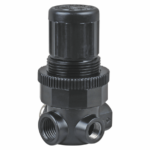
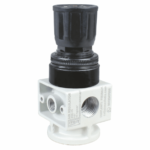
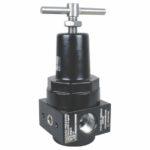
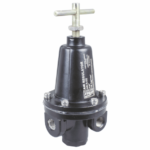
| Air Regulators | Maintain consistent operating pressure | View Product |
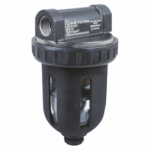
| Moisture Separators | Remove water from compressed air lines | View Range |
| Rotary Joints | Provide leak-free connections on rotating equipment | View Range |
| Fittings & Accessories | Connect and seal all system components | View Range |
| Air Lubricators | Add controlled lubrication to protect moving parts | View Product |
Quality matters enormously in both industries. A valve that sticks on an automotive welding line stops production. A fitting that leaks in a food plant risks contamination. This is why sourcing from a trusted, ISO-certified manufacturer is not optional – it is essential.
India’s Growing Demand for Pneumatic Automation
India is at an exciting inflection point. Both the automotive and food & beverage sectors are expanding rapidly, driven by urbanisation, rising disposable incomes, and government initiatives like Make in India and the Production Linked Incentive (PLI) scheme.
According to FICCI, India’s manufacturing sector is targeting a $1 trillion contribution to GDP by 2025-26, and automation is at the heart of that ambition. For plant managers and engineers looking to scale production while maintaining quality and safety, investing in reliable pneumatic components is one of the smartest decisions they can make.
Choosing the Right Pneumatic Partner
When your production line depends on pneumatic systems, the last thing you want is a component failure that shuts everything down. Here is what to look for in a pneumatic supplier:
- Comprehensive product range – so you can source everything from one trusted vendor (Explore All Products)
- ISO-certified quality – because consistency in manufacturing means consistency in performance (View Certifications)
- Industry experience – a manufacturer who understands real-world factory conditions (About Airmax)
- Technical support and documentation – to help you select, install, and maintain the right components (Downloads)
Airmax Pneumatics Ltd., based in Ahmedabad, Gujarat, is a leading pneumatic valve manufacturer and exporter serving automotive, food & beverage, pharmaceutical, textile, and chemical industries across India and internationally. With a full product range engineered for precision and durability, Airmax is the partner that keeps your production line moving.
Power Your Production with Pneumatics
Whether you are assembling cars or packaging cookies, pneumatic systems give you the speed, cleanliness, and reliability that modern production demands. The technology is proven. The components are available. And the right partner is just a call away.
Ready to automate smarter? Request a quote from Airmax Pneumatics or browse our complete product catalogue to find exactly what your production line needs.