
Pneumatic System Preventive Maintenance Checklist
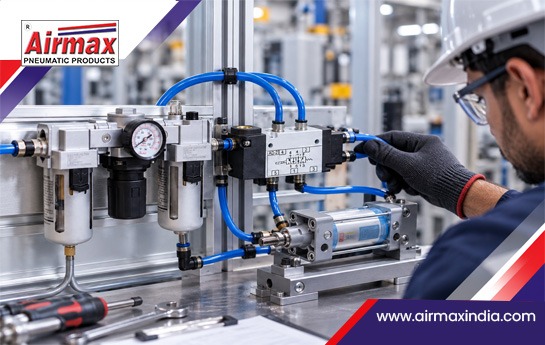
There is an old saying in manufacturing that goes something like this: “If you do not schedule time for maintenance, your equipment will schedule it for you.”
And when it comes to pneumatic systems, that unscheduled downtime always arrives at the worst possible moment – mid-shift, mid-order, mid-deadline. A seized cylinder, a leaking valve, a clogged filter. Suddenly your entire production line is standing still while your maintenance team scrambles to diagnose a problem that could have been caught weeks ago with a simple inspection.
Preventive maintenance is not glamorous. Nobody gets excited about draining a moisture separator or checking a hose for cracks. But it is the single most effective way to keep your pneumatic system running reliably, efficiently, and safely – year after year.
This guide gives you a complete, practical preventive maintenance checklist organised by frequency: daily, weekly, monthly, quarterly, and annually. Print it out, pin it to your maintenance board, and make it part of your team’s routine. Your equipment – and your budget – will thank you.
The Real Cost of Skipping Maintenance
Before we get into the checklist, let us talk about what is at stake when maintenance gets neglected.
According to the U.S. Department of Energy, compressed air systems in a typical plant account for 20 to 30 percent of total electricity consumption. When those systems are poorly maintained – running with leaks, clogged filters, degraded seals, and incorrect pressure settings – energy waste can climb by an additional 25 to 30 percent on top of that.
A Plant Engineering Magazine survey found that unplanned downtime costs industrial manufacturers an average of ₹2 crore per hour in lost production (varies by industry and scale). Most of those breakdowns are preventable.
Beyond the financial cost, neglected pneumatic systems also pose real safety risks. A hose that bursts under pressure, a cylinder that fails mid-stroke, or a valve that sticks in the wrong position can injure workers and damage surrounding equipment.
The bottom line: preventive maintenance is not an expense. It is an investment that pays for itself many times over.
How Preventive Maintenance Works
Preventive maintenance (PM) follows a simple philosophy – inspect, identify, and fix small problems before they become big ones.
Instead of waiting for a component to fail (reactive maintenance), you proactively check every part of the system at regular intervals. You replace wear items before they break. You tighten connections before they leak. You clean filters before they choke the air supply.
The result is fewer surprises, longer equipment life, lower energy bills, and a safer workplace.
Now, let us build your checklist.
Daily Maintenance Checks (Every Shift)
These are quick visual and auditory checks that any trained operator can perform at the start or end of each shift. They take just 10 to 15 minutes but catch the vast majority of developing problems.
Check system pressure – Read the pressure gauges at the compressor outlet and at key points in the distribution line. Pressure should match the setpoint on your air pressure regulators. A sudden drop may indicate a leak or a failing regulator.
Drain condensate from FRL units – FRL units (Filter, Regulator, Lubricator) collect moisture and contaminants from the air supply. The filter bowl needs to be drained daily – or more frequently in humid conditions. If your plant is in a high-humidity region, consider adding dedicated moisture separators upstream of the FRL.
Check lubricator oil level – If your system uses an air lubricator, verify that the oil reservoir has adequate fluid and that the drip rate is set correctly. Under-lubrication accelerates wear on valve spools and cylinder seals.
Listen for audible leaks – Walk the air lines and listen for hissing sounds at joints, pneumatic fittings, hose connections, and valve exhausts. Even small leaks waste significant energy over time.
Observe cylinder operation – Watch your pneumatic cylinders through a few cycles. Look for sluggish movement, jerky motion, or failure to fully extend or retract – these are early signs of seal wear or insufficient air supply.
Check for visible damage – Look for cracked hoses, loose fittings, dented tubing, or any physical damage that could lead to a failure.
Weekly Maintenance Tasks
Once a week, go a level deeper with hands-on component inspections.
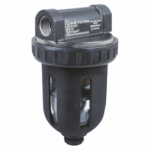
Inspect and clean air filter elements – Remove and examine the filter element in your air filter units. Clean or replace if visibly dirty. A clogged filter starves downstream components of air, causing pressure drops and sluggish actuator performance.
Test directional control valves – Manually cycle each directional control valve to verify smooth, complete switching. Check solenoid-operated valves – like the Poppet Solenoid Valve and Siko Series – for proper electrical connections and response.
Check hoses and tubing – Inspect all flexible hoses for signs of aging: cracking, swelling, hardening, or abrasion. Replace any hose that shows visible deterioration – do not wait for it to burst.
Tighten loose connections – Vibration gradually loosens threaded fittings and push-in connections. Go through each joint with the appropriate tool and retighten to manufacturer specifications.
Verify exhaust mufflers – Clogged exhaust mufflers create back-pressure that slows cylinder speed and increases energy consumption. Clean or replace them weekly in dusty environments.
Monthly Maintenance Tasks
Monthly checks focus on performance measurement and component replacement.
Conduct a leak audit – Use an ultrasonic leak detector or the soap-and-water method to systematically check every connection point, valve, cylinder, and fitting in the system. According to Compressed Air Best Practices Magazine, fixing identified leaks in a single audit can reduce compressed air energy costs by 20 to 40 percent.
Replace air filter elements – Even if a filter does not look visibly dirty, monthly replacement ensures consistent air quality. This is especially important in systems feeding sensitive equipment or in dusty environments. Consider high-flow air filters for demanding applications.
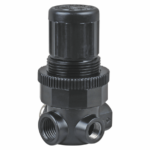
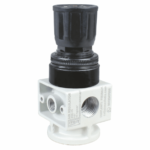
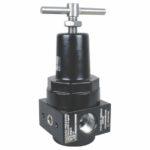
Test pressure regulator accuracy – Use a calibrated gauge to compare the actual output pressure of your air regulators against their setpoint. A regulator that drifts more than 0.5 bar from setpoint needs adjustment or replacement.
Inspect cylinder seals for external leakage – Apply a soapy solution around the rod seal of each pneumatic cylinder. Bubbles indicate a worn rod seal that needs replacement before it leads to a complete failure.
Lubricate moving parts – Apply manufacturer-recommended lubricant to pivot points, rod clevises, and any mechanical linkages connected to pneumatic actuators.
Check rotary joint condition – If your system includes rotary joints on rotating equipment, inspect for leaks, unusual vibration, or heat buildup. These are signs of internal seal wear.
Quarterly Maintenance Tasks
Every three months, step back and look at the system as a whole.
Full system pressure drop test – Pressurise the entire system, shut off the compressor, and monitor the pressure drop over a set period (typically 15 to 30 minutes). This gives you a baseline measurement of total system leakage. Track this number over time – if it is increasing, new leaks are developing faster than you are fixing them.
Inspect the complete FRL assembly – Remove, disassemble, and inspect the full FRL set. Check the filter bowl for cracks, the regulator diaphragm for wear, and the lubricator sight glass for clarity. Replace any worn internal parts.
Review valve response times – Use a stopwatch or PLC diagnostic data to measure the switching time of your directional control valves. Slowing response times indicate internal wear or contamination buildup.
Inspect piping and distribution network – Check main headers, drop legs, and branch lines for corrosion, sagging supports, or condensation accumulation. Ensure all drain points are functional.
Calibrate pressure sensors and switches – Any pressure-based safety interlocks or monitoring instruments should be verified against a known reference every quarter.
Annual Maintenance Overhaul
Once a year – ideally during a planned shutdown – perform a comprehensive system overhaul.
Rebuild or replace high-cycle cylinders – Cylinders that cycle hundreds of thousands of times per year should have their internal seals replaced or be rebuilt completely. Use genuine replacement parts from a trusted pneumatic component manufacturer.
Replace all flexible hoses – Even hoses that look fine on the outside degrade internally over time. Annual replacement is a low-cost insurance policy against burst hoses.
Overhaul FRL units – Replace all internal components – filter elements, regulator diaphragms, lubricator check valves, and O-rings. Consider upgrading to a high-flow FRL series if your system has grown beyond original capacity.
Inspect the compressor – While this checklist focuses on the distribution and point-of-use side, do not forget the compressor itself. Follow the compressor manufacturer’s annual service schedule.
Update maintenance records – Document everything you found, everything you fixed, and everything you replaced. Good records reveal patterns – like a particular valve model that fails repeatedly or a section of piping that keeps developing leaks – that help you make smarter purchasing and design decisions going forward.
Printable Quick-Reference Checklist
| Frequency | Task | Key Component |
| Daily | Check system pressure | Air Regulators |
| Daily | Drain FRL condensate | FRL Units |
| Daily | Check lubricator oil level | Air Lubricator |
| Daily | Listen for leaks | Fittings |
| Daily | Observe cylinder operation | Pneumatic Cylinders |
| Weekly | Inspect/clean air filter | Air Filter |
| Weekly | Test control valves | Control Valves |
| Weekly | Check hoses and tubing | Fittings & Accessories |
| Monthly | Conduct leak audit | Full System |
| Monthly | Replace filter elements | High-Flow Air Filter |
| Monthly | Test regulator accuracy | Air Regulators |
| Monthly | Inspect cylinder seals | Pneumatic Cylinders |
| Monthly | Check rotary joints | Rotary Joints |
| Quarterly | Full pressure drop test | Full System |
| Quarterly | Inspect complete FRL assembly | FRL Set |
| Quarterly | Review valve response times | Solenoid Valves |
| Quarterly | Inspect piping network | Moisture Separators |
| Annual | Rebuild high-cycle cylinders | Pneumatic Cylinders |
| Annual | Replace all flexible hoses | Fittings & Accessories |
| Annual | Overhaul FRL units | High-Flow FRL Series |
Common Maintenance Mistakes to Avoid
Even plants that do follow a maintenance schedule often make these errors:
Using cheap replacement parts – Saving a few hundred rupees on a knock-off seal or fitting costs you thousands when it fails prematurely. Always source from a reputable pneumatic component manufacturer.
Over-lubricating – More oil is not better. Excess lubricant can gum up valve spools and attract dirt. Follow the recommended drip rate for your lubricator.
Ignoring “small” leaks – A single 1mm leak at 7 bar wastes enough compressed air to cost your plant over ₹25,000 per year in electricity. Small leaks add up fast.
Skipping documentation – If you do not record what you find and fix, you lose the ability to spot trends and predict future failures.
Running the system at higher pressure than needed – Every 1 bar of excess pressure increases energy consumption by approximately 7 percent (U.S. DOE). Set your regulators to the lowest pressure that still meets application requirements.
Keep Your Pneumatic System in Peak Condition
Preventive maintenance is the difference between a pneumatic system that runs like a well-oiled machine and one that constantly surprises you with breakdowns, leaks, and rising energy bills.
The checklist in this guide covers everything you need – from the 10-minute daily walk-through to the annual overhaul. But even the best maintenance programme is only as good as the components it is maintaining. When you build your system with quality, ISO-certified pneumatic components, you start with a foundation that is designed to last.
Airmax Pneumatics Ltd., based in Ahmedabad, India, manufactures a complete range of industrial pneumatic products – cylinders, valves, FRL units, rotary joints, moisture separators, and fittings – all engineered for the demanding conditions of Indian industry. Trusted by automotive, food & beverage, chemical, pharmaceutical, and textile plants across the country.
Need reliable replacement components or a complete pneumatic system upgrade? Get a quote from Airmax Pneumatics today or explore our full product catalogue.