
Compressed Air Leakage: Hidden Cost & Fix Guide
Here is a question most factory managers never think to ask: What if the most expensive machine in your plant is not a machine at all – but the air escaping from it?
Compressed air is often called the “fourth utility” in manufacturing, right alongside electricity, water, and natural gas. It powers pneumatic tools, drives actuators, operates valves, and keeps production lines moving. But unlike electricity, where you would immediately notice a short circuit, compressed air leaks can go undetected for months – sometimes even years.
And during that time, they quietly drain your money.
In this guide, we are going to uncover the hidden costs of compressed air leakage, show you exactly how to find leaks, and walk you through proven fixes that can save your plant thousands every year.
How Common Is Compressed Air Leakage?
If you think air leaks are a minor issue, the numbers might surprise you. According to the U.S. Department of Energy (DOE), a typical industrial compressed air system loses 20 to 30 percent of its total output to leaks. In poorly maintained plants, that figure can climb as high as 50 percent.
Think about that for a moment. If your compressor is running at full capacity, up to half of the air it produces might be disappearing into thin air – literally. You are paying for electricity to generate compressed air that never reaches a single tool, cylinder, or actuator.
The Compressed Air & Gas Institute (CAGI) estimates that compressed air is one of the most expensive forms of energy in a factory, costing roughly 7 to 8 times more than equivalent electrical energy when generation inefficiencies are accounted for. Every leak, no matter how small, is money walking out the door.
Where Do Compressed Air Leaks Typically Happen?
Leaks rarely occur in the main piping. Instead, they tend to show up at connection points and components that experience wear, vibration, or pressure cycling. The most common leak locations include:
- Pipe joints and threaded connections – especially where thread sealant has degraded
- Quick-connect couplings and push-in pneumatic fittings that have worn O-rings
- Hose connections and aging rubber hoses with micro-cracks
- Valve stems and seals in directional control valves and shut-off valves
- FRL unit connections – drain points on filters, regulators, and lubricators that are not properly sealed
- Cylinder rod seals on aging pneumatic cylinders
- Condensate drains that are stuck open or malfunctioning
Basically, anywhere two components meet, there is potential for a leak. And the more connection points your system has, the higher the risk.
The True Cost of Air Leaks – It Is More Than You Think
Let us put some real numbers behind this. A single 3mm leak in a compressed air line operating at 7 bar can waste approximately 35,000 to 40,000 kWh of electricity per year. At average industrial electricity rates, that is roughly ₹2.5 to ₹3 lakh per year – from just one small leak.
Now multiply that across the dozens of potential leak points in a typical plant. A Plant Engineering Magazine survey found that the average manufacturing facility has between 20 and 50 active air leaks at any given time.
But the costs go beyond electricity:
- Compressor overload – Your compressor works harder to compensate, leading to higher wear and earlier failure
- Pressure drops – Downstream equipment does not get adequate pressure, causing pneumatic cylinders and valves to operate sluggishly or inconsistently
- Increased moisture – Lower pressure means more condensation in the lines, which can damage equipment and is exactly why moisture separators are so important
- Reduced product quality – Inconsistent air supply affects precision in automated processes
- Shortened equipment life – Components running on unstable pressure wear out faster
Why Most Plants Ignore Air Leaks
Here is the uncomfortable truth: most plants know they have leaks. They just do not prioritise fixing them.
The reasons are usually the same. “It is just air.” “We have always had that hiss.” “We will get to it during the next shutdown.” Sound familiar?
The problem is that air leaks are invisible. You cannot see compressed air escaping the way you would see a water leak or an oil spill. And because compressors automatically ramp up to maintain system pressure, the leak gets masked. The system still works – it just costs a lot more to operate.
This is the classic “boiling frog” scenario. The costs creep up so gradually that nobody notices until the energy bill becomes impossible to ignore.
How to Detect Compressed Air Leaks
The good news is that finding leaks is not complicated. Here are the most effective methods:
1. Ultrasonic Leak Detection
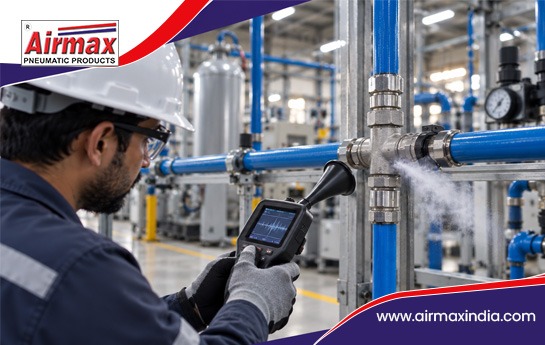
This is the gold standard. Ultrasonic leak detectors pick up the high-frequency sound that escaping air produces – even in noisy factory environments. A trained technician can scan your entire system in a day and tag every leak for repair.
2. The Soap-and-Water Method
Simple but effective. Apply a soapy water solution to joints, fittings, and connections. Bubbles indicate a leak. This works well for accessible areas and is a great starting point for smaller plants.
3. Pressure Drop Testing
Isolate a section of the system, pressurise it, and monitor the pressure gauge over time. If the pressure drops, there is a leak somewhere in that section. This method works best during planned shutdowns.
4. Listen During Off-Hours
When the plant is quiet – during breaks or after shifts – walk the compressed air lines and listen. You will be surprised by how many hisses and whistles you can hear when the background noise disappears.
Step-by-Step Fix Guide
Once you have identified your leaks, here is how to fix them systematically:
Step 1: Tag and Prioritise
Mark every leak with a tag that includes the location and estimated severity. Fix the biggest leaks first for maximum immediate savings.
Step 2: Tighten and Reseal Connections
Many leaks can be fixed simply by tightening threaded connections and replacing worn-out thread sealant (PTFE tape or liquid thread sealant). Make sure all pneumatic fittings and accessories are torqued to manufacturer specifications.
Step 3: Replace Worn Components
Cracked hoses, degraded O-rings, and worn valve seals need to be replaced – not patched. Use quality replacement parts from a trusted pneumatic component manufacturer to ensure a lasting fix.
Step 4: Upgrade Your FRL Units
Old or undersized FRL units are a common source of leaks and pressure inconsistencies. Consider upgrading to a properly sized standard FRL set or a high-flow series for demanding applications. A good FRL unit not only prevents leaks at its own connection points but also ensures clean, regulated air reaches downstream equipment – reducing wear and failure across the entire system.
Step 5: Install Moisture Separators
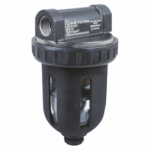
Excess moisture accelerates corrosion, which creates new leak points over time. Installing moisture separators at strategic points in your air distribution system helps protect pipes, fittings, and components from moisture damage.
Step 6: Conduct Regular Audits
Fixing today’s leaks is only half the battle. New leaks will develop over time as components age and vibration loosens connections. Schedule quarterly or bi-annual leak audits to catch problems early.
The Role of Quality Pneumatic Components
Here is something many plant managers learn the hard way: cheap components cost more in the long run. Low-quality fittings, valves, and seals may save money upfront, but they fail sooner, leak more often, and create downstream problems that are expensive to diagnose and fix.
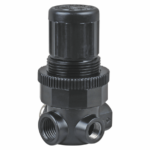
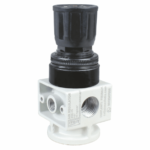
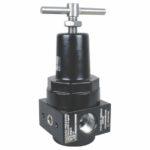
Investing in high-quality pneumatic components – such as precision-manufactured air pressure regulators, durable air filters, and reliable directional control valves – is one of the most effective ways to build a leak-resistant compressed air system from the ground up.
Preventive Maintenance Checklist
Keep this checklist handy and review it during every scheduled maintenance window:
- Inspect all threaded connections and retighten as needed
- Check and replace O-rings on quick-connect fittings
- Drain condensate from FRL units and moisture separators
- Inspect hoses for cracks, swelling, or hardening
- Test pressure regulators for consistent output
- Verify that all shut-off valves seal completely
- Listen for audible leaks during quiet periods
- Schedule an ultrasonic leak survey at least twice a year
Choosing the Right Components for a Leak-Free System
When it is time to replace or upgrade your compressed air components, choose a manufacturer that understands industrial-grade reliability. Look for:
- ISO-certified quality – Consistent manufacturing standards matter (View Certifications)
- Complete product range – Everything from cylinders to valves to FRL units under one roof (Browse All Products)
- Technical support – A partner who can help you select the right components for your specific application (About Airmax)
Airmax Pneumatics Ltd., based in Ahmedabad, India, is a leading pneumatic valve manufacturer and supplier trusted by industries ranging from chemical processing and pharmaceuticals to textiles and food packaging. Every product is engineered for precision, durability, and – most importantly – a leak-free performance that you can count on.
Stop Losing Money to Invisible Leaks
Compressed air leakage is one of those problems that is easy to ignore but impossible to afford in the long run. The air you are losing today is money you will never get back.
The fix does not have to be complicated. Start with a leak audit, replace worn-out components with quality alternatives, and commit to a regular maintenance schedule. Your energy bills – and your equipment – will thank you.
Ready to build a leak-free compressed air system? Request a quote from Airmax Pneumatics or explore our complete range of pneumatic products designed for industrial reliability.