
Why Food Processing Plants Struggle with Hygiene-Compliant Automation
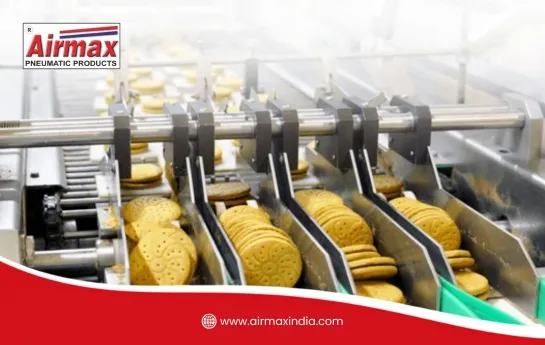
Food processing is one of the toughest environments to automate — not because the machines are complicated, but because everything in the plant has to survive water, steam, caustic wash-downs, and constant temperature swings while still meeting FSSAI, HACCP, and ISO 22000 hygiene standards. A control panel or actuator that works perfectly in a dry manufacturing unit can fail within months on a wet processing line. This is the core reason so many Indian food plants still struggle to move from manual or semi-automated operations to full, hygiene-compliant automation.
At Airmax Pneumatics Ltd, we’ve supplied pneumatic components to food and beverage manufacturers for over three decades, and the same set of problems keeps showing up on the shop floor. Below, we break down why hygiene-compliant automation is harder than it looks, and what actually solves it.
1. Wash-Down Environments Destroy Standard Components
Most industrial automation components are designed for dry factory floors, not for plants that get hosed down with hot water and detergent multiple times a day. Standard solenoid valves, cylinders, and fittings corrode, seize up, or develop micro-leaks within a year in this environment, and a leaking pneumatic joint is both a contamination risk and a compliance failure.
The fix: Food-grade automation needs stainless steel or specially coated pneumatic cylinders, corrosion-resistant directional control valves, and sealed fittings rated for IP65/IP67 wash-down duty. Airmax’s pneumatic cylinder range and directional control valves are built with this kind of duty cycle in mind, which is why they’re commonly specified for packaging, filling, and conveying lines in food plants.
2. Compressed Air Quality Is an Afterthought
Compressed air touches food products more often than plant managers realise in blow-off nozzles, pneumatic conveying, packaging seals, and pick-and-place systems. If that air carries moisture, oil, or particulates, it becomes a direct contamination pathway. Yet in many plants, air preparation is treated as a minor utility rather than a hygiene control point.
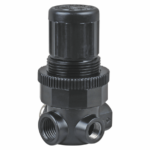
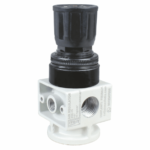
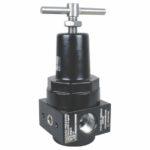
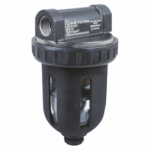
The fix: A properly sized FRL (Filter-Regulator-Lubricator) unit and moisture separator upstream of every pneumatic actuator is non-negotiable in food-grade automation. This is one of the most overlooked line items in hygiene compliance audits. Explore Airmax’s FRL units and moisture separators built specifically to keep line air clean and dry.
3. Rotating and Reciprocating Parts Create Cleaning Dead Zones
Automated filling heads, rotary fillers, and mixing arms all rely on rotary unions or joints to pass air or fluid into moving parts. Poorly designed rotary joints create crevices where product residue and bacteria accumulate, exactly what HACCP audits flag first.
Also read: 7 Automation Design Mistakes That Increase Machine Downtime and Maintenance Costs
The fix: Hygienic-design rotary joints with smooth internal geometry and minimal dead space significantly reduce cleaning time and microbial risk. Airmax’s rotary joints are engineered for continuous-duty rotary automation in demanding process environments.
4. Automation Vendors Don’t Understand Food Compliance
A large share of automation failures in food plants aren’t mechanical at all; they’re a mismatch between what a general-purpose automation vendor supplies and what food safety auditors actually require (material certificates, traceability documentation, food-grade lubricant compatibility). Plants end up retrofitting components after installation, which costs more than doing it right the first time.
The fix: Work with component suppliers who understand food industry standards from the design stage, not after an audit fails.
Common Hygiene-Automation Failure Points at a Glance
| Failure Point | Typical Cause | Compliance Risk | Airmax Solution |
|---|---|---|---|
| Corroded cylinders/valves | Standard-grade materials in wash-down zones | Contamination, downtime | Pneumatic Cylinders |
| Contaminated compressed air | No filtration/moisture control | Direct product contamination | FRL Units / Moisture Separators |
| Bacterial build-up in rotary parts | Poor hygienic design | HACCP non-conformance | Rotary Joints |
| Leaking fittings/seals | Low-grade accessories | Air loss, contamination | Pneumatic Accessories |
| Inconsistent actuation | Wrong valve selection for cycle rate | Line stoppages | Directional Control Valves |
What Hygiene-Compliant Automation Actually Requires
Getting this right isn’t about buying “premium” versions of the same components; it’s about designing the pneumatic system around the wash-down cycle, the product being handled, and the specific compliance framework (FSSAI, HACCP, ISO 22000) the plant is audited against. In our experience working with dairy, beverage, and packaged-food manufacturers across India, the plants that get hygiene automation right start with three things: correctly rated components, clean/dry compressed air at the point of use, and a maintenance schedule that matches the wash-down frequency, not a generic industrial schedule.
Talk to Airmax Before Your Next Compliance Audit
If your plant is planning an automation upgrade or preparing for a hygiene compliance audit, it’s worth reviewing your pneumatic system design before, not after, problems show up. Airmax Pneumatics Ltd has been manufacturing ISO- and CE-certified pneumatic cylinders, valves, FRL units, and rotary joints since 1992, with deployments across food, beverage, and process industries.
Get a Quote or explore our complete product range — to find hygiene-ready pneumatic components for your line.
Frequently Asked Questions
Why do pneumatic components fail faster in food processing plants than in other industries?
Frequent water and chemical wash-downs, combined with temperature cycling,
accelerate corrosion and seal degradation on components not specifically
rated for hygienic, wet environments.
What is the biggest hidden compliance risk in food plant automation?
Compressed air quality. Unfiltered or moist air used near product contact
points is one of the common causes of HACCP non-conformance during audits.
Can existing plants retrofit hygienic pneumatic components without a full line shutdown?
In most cases, yes. Components like FRL units, moisture separators, and
directional control valves can be replaced section-by-section during
scheduled maintenance windows.