
Pneumatics in the Automotive and Food & Beverage Industries: Uses, Benefits and What to Check
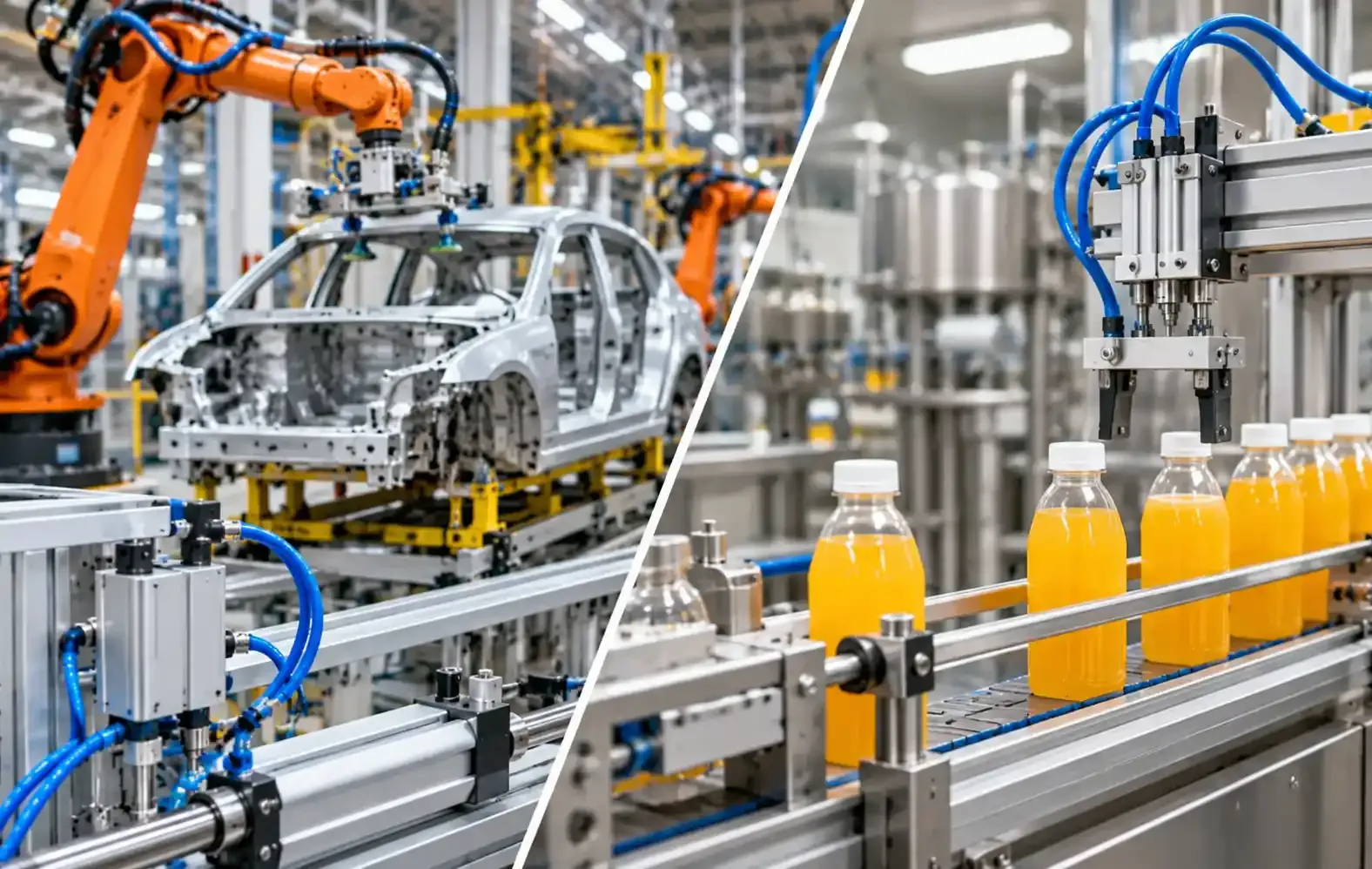
A car body shop and a bottling line look nothing alike. One is full of sparks, steel and robots. The other is wet, cold and scrubbed down every shift. Yet both run on the same thing: compressed air pushing cylinders, closing grippers and switching valves, thousands of times a day.
What changes between the two is what the air system must put up with. In a car plant, the priorities are speed, repeatable positioning and heavy duty. In a food plant, it is hygiene, washdown and clean air. This guide covers where pneumatics is used in each industry, what goes wrong, and what to check when you choose components.
Why both industries use pneumatics
One automotive guide explains the appeal this way: a central controller has to coordinate many stations, and solenoid valves, which an electrical coil switches, suit that job well [1]. A food-industry supplier makes a related point, describing pneumatic systems as simple, robust and well suited to hygienic design [7].
Pneumatics is not free of drawbacks, and it is fair to say so. One servo-actuator maker calls pneumatic technology mature, with a low purchase cost but a high operating cost [3]. Compressed air takes energy to make, and leaks waste it. We will come back to this.
Pneumatics in the automotive industry
Body-in-white: holding parts while they are welded
Body-in-white is the stage where bare, unpainted steel parts are welded together into the vehicle’s basic structure. The parts have to be positioned accurately and held firmly during welding and assembly, whether a robot or a person does the work [2]. The product range one workholding supplier lists for this stage includes pneumatic power clamps, pneumatic grippers, sheet metal grippers and vacuum products [2].
Spot welding guns
Pneumatic spot welding guns have been used in vehicle plants for years, both positioned by hand and carried by robots [3]. The same white paper says many automakers building for markets such as China, Brazil, Korea and India still rely mainly on manually positioned pneumatic equipment [3].
That paper comes from a company that sells servo actuators, so read its comparisons with that in mind. Its main complaints about pneumatics are that clamping force can vary from weld to weld because of pressure swings, leaks and contamination, that motion is abrupt and hard to program, and that the weld timing depends on a set time, since cylinder travel time shifts with air pressure [3]. These are useful points to know even if you stay with pneumatics. They are the reasons to keep supply pressure steady and the air clean.
Assembly, robot cells and press work
A valve-maker’s guide to automotive plants describes several everyday uses [1]:
The same guide gives some switching times worth knowing. A direct-acting solenoid valve switches in about 5 to 10 milliseconds, while a pilot-operated solenoid valve takes about 15 to 150 milliseconds. The faster type draws relatively high power, and the pilot-operated type is slower, needs enough line pressure to work, and is more prone to clogging from solid impurities, so air quality matters [1].
The paint shop needs very clean air
Vehicle body painting is one of the places where air quality matters most. One compressor maker says clean, dry air is needed to get the best results, and that painting asks for higher air quality than many other uses, especially for water, particles and oil [4]. Its guide notes that the air from an oil-injected screw compressor carries small amounts of oil, with an average of about 3 ppm, and suggests a refrigerant dryer (pressure dew point of about 3 °C), particle filters, an oil-separating filter, and an optional activated carbon filter to get what it calls technical oil-free air [4].
Pneumatics in food and beverage
Where it is used
Food and beverage plants use air in a surprising number of places. One guide lists sorting, cutting and shaping, chopping and slicing, ingredient dispensing, mixing, blow moulding of PET bottles, packaging and filling, and conveying [5]. Vacuum cups and pneumatic grippers lift and place delicate or oddly shaped products into cartons, and compressed air supports the cleaning, filling and sealing of packages [5]. Another source lists conveying and handling, filling and dosing, clamping and positioning, packaging and palletising, and valve control as typical jobs [7].
Pneumatic cylinders also tolerate vibration, temperature extremes, and exposure to chemicals and fluids. One guide gives a temperature range of -40 °C to 150 °C for cylinders [5], and a manufacturer’s article notes that typical cylinders run from -20 °C to 80 °C, with specialised designs reaching -40 °C or 150 °C [6].
Washdown and hygiene
Food plants deal with moisture, cleaning chemicals, high-pressure washdown, temperature swings and frequent clean-in-place cycles [7]. Anything that traps moisture or harbours bacteria can become a food safety problem [7]. This drives the choice of materials and design:
Seals and lubrication
Product residue is a real problem for piston rods. Ice, sugar crystals and dough can build up on the rod and damage the seal. Metal scraper rings, instead of plastic or rubber ones, are recommended to strip the residue off before it reaches the seal [5][6].
On lubrication, one guide advises avoiding lubricated air and manual lubrication where possible, because lubricant can contaminate the product or collect near exhaust ports. It prefers pre-lubricated or lubrication-free components with food-grade grease [6]. A second source agrees, suggesting lubrication-free or pre-lubricated assemblies, an FRL unit that is installed and maintained, and automatic stainless steel drains [5]. Non-relieving regulators, which do not vent liquid or gas to the atmosphere, are also recommended [5][6].
Air quality is a food safety issue
When air touches the product, for example in pneumatic conveying, its contaminants can reach the food [8]. One guide warns that water in piping can breed fungi and microorganisms that may transfer to food [5].
The standard for compressed air purity is ISO 8573-1, which sets limits for solid particles, water and oil across seven classes, where lower classes need cleaner air [8]. A compressor maker’s guide says Class 0 or Class 1 is typically needed for food and beverage applications, and recommends Class 0 where the air touches food directly. It also recommends oil-free compression to remove oil at the source [8]. Check what your own food safety plan and customers require, because these requirements are set by the plant and its auditors.
Cold rooms add another detail. In sub-freezing conditions, the air needs to be dry enough to stop ice forming, because liquid particles can gel or freeze below 32 °F (0 °C) and hurt performance [6].
Side by side
| Automotive | Food and beverage | |
| Typical jobs | Clamping, gripping, assembly, press work, welding guns [1][2][3] | Filling, packaging, conveying, sorting, blow moulding [5][7] |
| Main concern | Repeatable force, speed, steady pressure [1][3] | Hygiene, washdown, clean air [6][7][8] |
| Air quality focus | Especially in the paint shop: dry, particle-free, low oil [4] | ISO 8573-1 class, oil-free compression, moisture control [5][8] |
| Watch-outs | Pressure swings, leaks and contamination [3]; valve clogging [1] | Residue on rod seals, crevices that harbour bacteria, lubricant contamination [5][6] |
What to check before you choose components
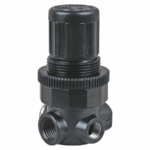
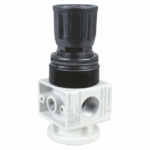
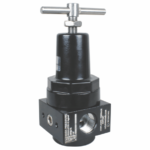
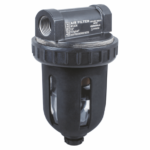
Airmax products for automotive and food and beverage plants
Airmax Pneumatics Ltd has made pneumatic products in Ahmedabad since 1992. Here is how our range maps to the points above:
If your line has washdown or food-contact requirements, tell us up front which materials, seals, grease and certifications you need, so we can confirm the right model before you order.
For more background, read what a pneumatic system is, single acting vs double acting cylinders, and our pneumatic vs hydraulic comparison. To keep a line running, use our preventive maintenance checklist and our guide to finding and fixing compressed air leaks.
Talk to us about your line
Send us the application: the industry, the pressure at the machine, the cleaning method, and the temperatures involved. Our team can help you match cylinders, valves and air preparation to the job. You can contact us here or download the product catalogue.
References
- Humphrey Automation. “Pneumatic Valves in Automotive Manufacturing.” https://pneumation.ca/pneumatic-valves-in-automotive-manufacturing/
- DESTACO. “Body-in-White.” https://destaco.com/applications/body-in-white
- Tolomatic. “Servo spot welding offers superior performance and lower lifetime costs for auto manufacturing” (white paper; vendor content). https://tolomatic.com/?p=3957
- Chicago Pneumatic. “How is Compressed Air Used in Vehicle Body Painting?” 2017. https://compressors.cp.com/en-in/expert-corner/blog/compressed-air-for-vehicle-body-painting
- West, L. “Compressed Air In The Food & Beverage Industry.” Rowse Pneumatics, 2021. https://www.rowse-pneumatics.co.uk/blog/post/compressed-air-food-beverage-industry
- Heney, P. (credited to R. McDonnell, Parker Hannifin). “How to choose pneumatics in food and beverage processing.” Fluid Power World, 2018. https://www.fluidpowerworld.com/choose-pneumatics-food-beverage-processing/
- PPTechnologies. “How Food Factories Use Pneumatic Automation to Meet Hygiene Standards.” 2026. https://www.processpneumatics.com/how-food-factories-use-pneumatic-automation-to-meet-hygiene-standards/
- Atlas Copco. “Food safe compressed air: Standards and equipment for the food industry.” https://atlascopco.com/en-uk/compressors/industry-solutions/pneumatic-conveying-systems/compressed-air-standards-food-industry
- Airmax Pneumatics Ltd. “Pneumatic Cylinder.” https://www.airmaxindia.com/products/pneumatic-cylinder/