
Why Cement Plants Struggle with Equipment Reliability in Harsh Conditions

Ask a maintenance engineer at a cement plant what keeps them up at night and the answer is rarely a single machine. It is the chain. The kiln feeds the cooler, the cooler feeds the cement mills, and a small fault in one place can quietly stop all of them.
Cement making is hard on equipment in almost every way you can name: heat, dust, abrasion, vibration, and a schedule that hardly ever lets machines rest. This post goes through why those conditions are so punishing, where failures tend to start, and what plants can do about it. It also covers a part of the plant that gets less attention than the kiln, which is the compressed air that runs dust collection.
A note on sources before we start. Several of the maintenance guides I used are published by software companies that sell maintenance systems. I have used them mainly for descriptions of how things fail and left out their sales claims. Where I do quote a figure from one of them, the text says so.
What makes a cement plant so hard on equipment
Why one failure becomes many
In a cement plant, equipment is linked in a line. One guide describes the chain like this: a kiln stop halts the raw mill, idles the clinker cooler, and starves the cement mills that depend on clinker [4]. Another says key assets are hard to back up, so a single failure can stop production, with losses of tens of thousands of euros per hour depending on plant size and output [7].
Dollar figures vary a lot between sources. One maintenance guide cites industry estimates of $10,000 to $40,000 for each hour of unplanned downtime but does not say where the estimate comes from [4], so treat it as a rough guide and not a measured number.
Delays make it worse. The same guide notes that a missing spare part can turn a three-hour repair into a three-day shutdown [4]. That is a vendor’s illustration, but anyone who has waited on a part will recognise it.
Where failures usually start
| Area | What tends to go wrong |
| Rotary kiln | Tyres and riding rings deform over time, and seals fail, which lets hot gas and dust escape and damage nearby parts [4] |
| Mills and separators | Liners, grinding media, separator blades and bearings wear [4][7] |
| Crushers | Hammers, jaws and liners wear [7] |
| Conveyors | Belts, pulleys, joints, rollers and bearings degrade in dusty conditions [7] |
| Fans and bearings | Contamination and vibration shorten bearing life [3] |
| Dust collectors | Filter bags wear, and fans and motors need regular inspection [7] |
| Electrical and controls | Power quality problems, cable damage or sensor faults can stop production even when the machinery is sound [4] |
A small example: bearings on a kiln fan
A bearing manufacturer’s case study from a cement plant in Indiana shows how small details turn into repeat failures. The fan ran at 2000 to 2500 RPM, driven by a 150 HP motor. Its split-housed bearings “had routinely failed in three months or less” [3].
The article points to a few causes. Split housings need to be assembled on site, which can expose the inside of the bearing to fine dust. Vibration loosened lock nuts, which caused wear. Fine cement dust also got into the lubricant during installation, and tight spacing made proper assembly difficult [3]. The plant switched to a different bearing design. The article is a product promotion and does not give figures for downtime or savings, so the case is useful for the failure causes, not for the claimed results [3].
The point is simple: in dusty plants, the way a part is installed and sealed matters as much as the part itself.
The part people forget: dust collection and compressed air
Dust collectors do not get the attention that kilns and mills get, but they affect whether the plant can keep running. One maintenance vendor describes dust collectors as a hidden reliability risk, because bag wear, fan blade erosion and duct corrosion build up slowly. It adds that a failed baghouse can trigger an environmental compliance shutdown, not just a slowdown [5].
Many cement dust collectors are baghouses [7], and the maintenance guides for cement plants describe pulse-jet cleaning valves on them [6]. Pulse-jet is one of three common cleaning methods, and it runs on compressed air [2]. A short blast of compressed air, lasting about 0.1 seconds, is sent down into each bag. This breaks the dust cake so it falls into a hopper, and a digital timer opens solenoid valves at set intervals to trigger it [2]. A working baghouse typically collects 99% or more of particulates [2].
That means a plant’s dust control depends on valves opening and closing thousands of times, on air that is clean enough for them. A maintenance-software vendor’s guide describes how this goes wrong [6]:
The Wikipedia entry on baghouses supports the moisture point from a neutral angle: moisture and oily or sticky particles can bind the filter media [2].
Air quality matters more than most plants assume
Compressed air is not free of contaminants. According to a guide on ISO 8573-1, the international standard for compressed air purity, contaminants in ambient air concentrate when compressed and act like an abrasive, corrosive slurry. The results include sludge, rust, sticking cylinders and leaking valves [8].
ISO 8573-1 sets purity classes for particles, water and oil, written as three numbers such as 1:2:1, where a lower number means cleaner air [8]. The same guide suggests plant air for robust tooling can often sit at class 4:4:4 or 3:4:4, using a particulate filter of around 5 to 40 microns plus a water separator [8]. For your own plant, use the air quality your valve and cylinder manufacturers specify.
Why plants stay reactive
If the causes are well known, why do plants keep getting caught out? The sources point to a few reasons.
What helps
Good practice is not secret. The guides I read agree on the basics:
For the compressed air side, our guides on finding and fixing compressed air leaks and a pneumatic system preventive maintenance checklist are a practical place to start. If you want the basics first, read our explainer on what a pneumatic system is. Other heavy industries face similar problems, as we discuss in our posts on chemical processing plants and tile and ceramic production lines.
Choosing pneumatic components for a dusty, hot plant
Our cylinder page lists the factors we suggest checking when selecting a cylinder: required force, bore, stroke, operating pressure, mounting, operating environment (temperature, dust, moisture and cycle frequency), and cushioning and speed [9]. In a cement plant, the environment line deserves most of your attention.
The range includes heavy-duty designs, and barrel and body materials of aluminium, stainless steel, and mild steel with a honed, hard chrome plated bore [9]. Check the datasheet for the temperature and sealing details of the exact model you plan to use, because those are not given at range level.
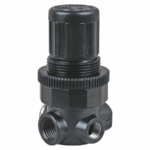
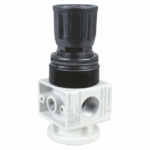
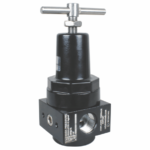
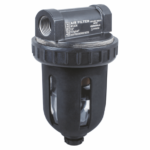
Other Airmax products that matter in a plant with heavy dust and moisture:
Talk to us about your plant
If you are fighting repeat failures on pneumatic equipment, send us the details: the application, the air pressure you have, and the conditions around the machine. We can help you match cylinders, valves and air preparation to the job. You can contact our team or download the product catalogue.
References
- Wikipedia. “Cement kiln.” https://en.wikipedia.org/wiki/Cement_kiln
- Wikipedia. “Baghouse.” https://en.wikipedia.org/wiki/Baghouse
- World Cement. “Enhancing bearing reliability in harsh cement plant environments.” https://www.worldcement.com/special-reports/04062026/enhancing-bearing-reliability-in-harsh-cement-plant-environments/
- Cryotos. “How to Reduce Downtime in Cement Plants.” https://www.cryotos.com/blog/how-to-reduce-downtime-in-cement-plants
- OxMaint. “Cement Plant Maintenance: Challenges, Solutions, and Best Practices.” https://oxmaint.com/industries/manufacturing-plant/cement-plant-maintenance-challenges-solutions
- OxMaint. “Cement Plant Dust Collector Pulse Jet Valve Maintenance.” https://oxmaint.com/industries/cement-plant/cement-plant-dust-collector-pulse-jet-valve-maintenance
- ManWinWin. “Cement Plant Maintenance: Strategies for Efficient Operations.” https://www.manwinwin.com/cement-plant-maintenance/
- Pneumatic Now. “Understanding ISO 8573-1 for Pneumatic Systems.” https://pneumaticnow.com/understanding-iso-8573-1-for-pneumatic-systems/
- Airmax Pneumatics Ltd. “Pneumatic Cylinder.” https://www.airmaxindia.com/products/pneumatic-cylinder/